

When your online presence is your career, protecting it becomes non-negotiable.
For creators, your digital identity is your brand, your business, and your livelihood all rolled into one.
Yet, as influence has grown, so have the threats. From hacked Instagram accounts to AI-generated deepfakes damaging reputations overnight, the influencer space has become a prime hunting ground for cybercriminals.
This isn’t fear-mongering, it’s reality.
And every influencer, big or small, needs to take cybersecurity as seriously as content strategy.
Let’s dive into how you can safeguard your personal brand security in the AI era without losing authenticity or creative freedom.
1. Why Influencers Are Prime Targets for Cyber Threats
Influencers today sit at the intersection of visibility and vulnerability.
You share your life, your opinions, your passions, and in doing so, leave a trail of data.
Hackers see that as an opportunity.
- Your accounts are tied to business deals and brand collaborations.
- Your audience trusts your name and image, making impersonation lucrative.
- Your inbox is full of confidential brand details, invoices, and unreleased campaign info.
In 2024, cybersecurity firm Trend Micro reported that social media account takeovers among influencers had risen by 36% year over year. The reasons are simple:
- High follower counts mean high impact.
- A hacked creator account can spread scams to thousands within minutes.
- The “reset password” process is often the weakest link.
The bigger your influence, the bigger the target on your back.
2. Deepfakes, Voice Cloning, and the AI Identity Crisis
We’re entering a strange new world where your voice or your face can be used without your consent.
Deepfake technology has made it alarmingly easy for bad actors to create realistic videos or audio clips showing you saying or doing things you never did.
Consider this:
- In 2025, a popular travel influencer woke up to find a deepfake video of her endorsing a scam crypto project.
- Within hours, thousands of followers had clicked the fake link, thinking it was genuine.
- Her trust ratings plummeted, and sponsors paused partnerships until the issue was resolved.
The rise of AI voice cloning and impersonation means even your DMs or voice notes can be faked.
This isn’t just about “privacy.” It’s about protecting your digital likeness and your reputation currency.
Quick Tip:
Set up Google Alerts for your name and handle. Tools like PimEyes and Have I Been Trained can help track if your images or voice data are being misused online.
3. Passwords and 2FA: The Boring Basics That Save Careers
No one becomes a creator to think about passwords.
You’re busy editing videos, planning shoots, replying to brands — not managing logins.
But here’s the harsh truth: most account hacks don’t happen because of “elite hackers.” They happen because of one reused password.
It’s the digital equivalent of leaving your house door unlocked and hoping no one notices.
Think of your password and 2FA setup as the lock and alarm system for your brand.
Even if someone finds your key, they still can’t get in without the second layer of defense.
Here’s how to build that armor:
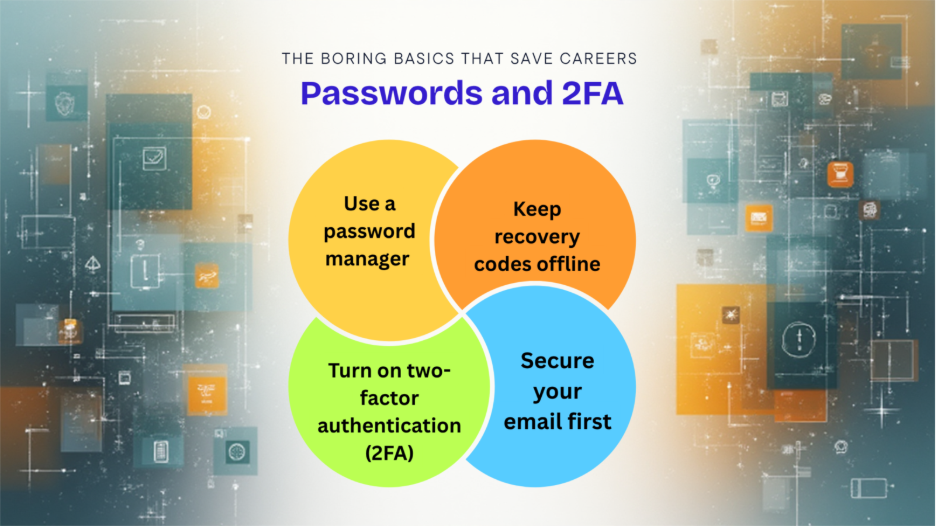
- Use a password manager like 1Password or Bitwarden it creates and remembers strong, unique passwords for each account.
- Turn on two-factor authentication (2FA) using an app (like Authy or Google Authenticator) instead of SMS. Text messages can be intercepted.
- Keep recovery codes offline, not in your inbox or notes app.
- Secure your email first. If hackers get into that, they can reset every other password you have.
These small, unglamorous steps are what separate creators who lose accounts from those who sleep peacefully.
It’s not exciting, but neither is losing years of content overnight.
4. Avoiding Phishing, Fake Collabs, and Impersonation Scams
Every creator has received that one email:
“Hi, we’re a luxury skincare brand interested in a paid collaboration. Please click the link below to confirm your interest.”
It looks like a real logo, tone, even a sender name. But one click, and your login credentials are stolen.
Spot the red flags:
- The email address doesn’t match the official domain (e.g., brand@gmail. com).
- You’re asked to download a file or “log in” to view the proposal.
- Payment or contract discussions happen outside official channels.
Before saying yes to a collab:
- Cross-check the sender’s LinkedIn or company page.
- Contact the brand through official website channels.
- Never open attachments unless you verify authenticity.
And for DMs it’s even trickier. Impersonators often mimic fellow creators or agencies. If someone you “know” sends an odd link, confirm via a voice note or another platform before clicking.
5. Case Study: When an Influencer’s Account Became a Scam Launchpad
The attack started when an Instagram influencer suddenly lost network service — something she assumed was just a technical glitch. In reality, a hacker had pulled off a SIM swap, taking control of her phone number and using it to bypass two-factor authentication. Within minutes, her Instagram account was fully compromised.
The hacker quickly turned her profile into a scam hub, posting a fake “$125,000 cash giveaway.” The post looked authentic because it reused old videos of the influencer and added AI-generated voiceovers that perfectly mimicked her tone and speaking style. Thousands of followers clicked the link, believing it was real.
Those who clicked were taken to a polished phishing site that asked them to “claim their reward” by entering banking and personal details. The scam spread fast, and only when followers began messaging her close contacts did people realize something was wrong.
Investigators later found that the attack combined SIM-swapping, deepfake audio, and phishing not just to steal her account, but to exploit her credibility and trick her own audience. The incident showed how quickly an influencer’s identity can be hijacked and used as a weapon against the very people who trust them most.
Source – Cyberlink
6. The Influencer’s Cybersecurity Checklist: 5 Everyday Habits
You don’t need to be tech-savvy to stay safe.
You just need discipline and awareness.
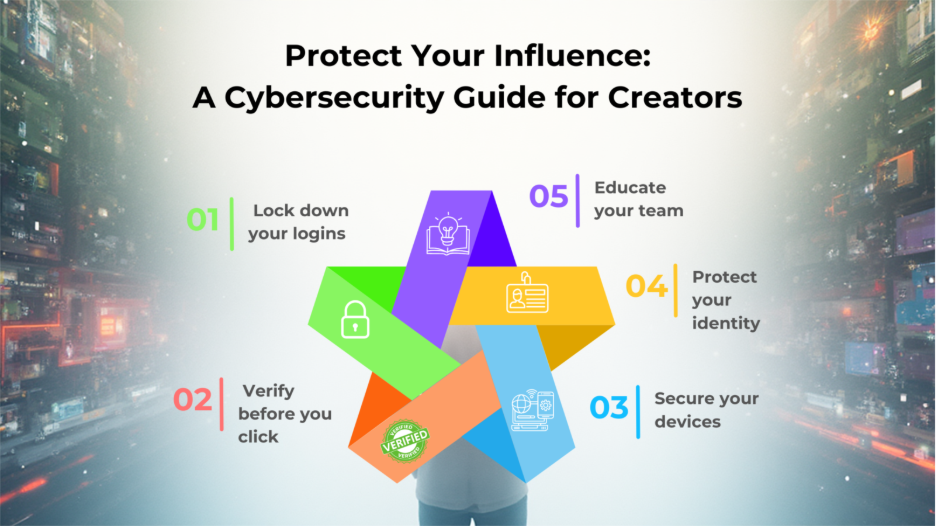
1. Lock down your logins
Use a password manager + enable 2FA on every account (especially email, social, and payment apps).
2. Verify before you click
Pause before opening links or attachments even, from known contacts. Scammers rely on urgency.
3. Secure your devices
Keep your phone and laptop updated. Use Face ID, strong passcodes, and avoid public Wi-Fi for logins.
4. Protect your identity
Set Google Alerts for your name, use reverse image tools to catch impersonations, and watermark original content.
5. Educate your team
If you have an editor, manager, or assistant with access, train them too. Your brand’s weakest password could belong to someone else.
Conclusion: Influence Is Power. Protect It Like One
In the creator economy, your digital presence is your brand equity.
A hacked account, a deep-fake scandal, or a leaked password can undo years of trust in days.
Cybersecurity isn’t just a tech issue, it’s a brand issue.
The same way you invest in cameras, lighting, and storytelling, invest in protection.
Because in the age of AI and hyper-connectivity, your influence is only as secure as your digital habits.